


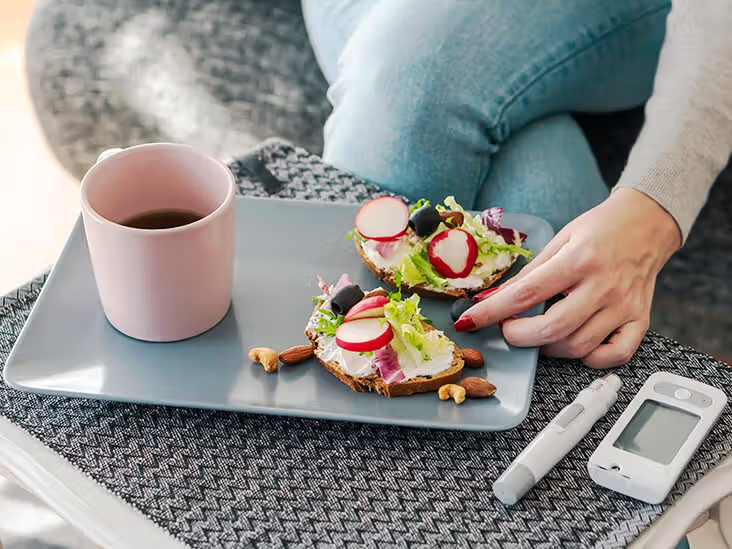
For millions of Americans living with Type 2 diabetes, the most consequential health decisions happen not in a clinic but in a kitchen — or increasingly, in the absence of one. Blood sugar management is daily, relentless work, and the gap between knowing what to eat and executing it is wider than most people expect.
That gap has less to do with willpower than it does with infrastructure. The Logistics Problem Nobody Talks About
Dietary guidelines for people with diabetes are straightforward on paper: moderate carbohydrates, consistent meal timing, reduced sodium, controlled portions. The execution, however, demands time, planning, grocery access, cooking ability, and nutritional literacy — all at once, every single day.
For older adults, caregivers, and people managing multiple chronic conditions simultaneously, that’s a significant operational burden. Research from the American Diabetes Association consistently shows that adherence to structured meal plans drops not because of motivation, but because of the friction involved in sustaining them. Fatigue, limited mobility, cognitive load from medication schedules, and reduced appetite are all factors that erode even the most well-intentioned dietary routines.
This is where the conversation about food infrastructure becomes critical — and underappreciated.
Structure as a Health Intervention
There is growing evidence that removing the decision-making burden around meals produces measurable outcomes for people managing chronic conditions. When food choices are pre-structured and nutritionally calibrated, cognitive bandwidth is freed for other aspects of disease management: monitoring, medication, and movement.
This is part of why dietitian-approved, portion-controlled diabetic prepared meals have gained traction not just as a convenience product, but as a functional health support tool. The appeal is not indulgence — its consistency. Consistent carbohydrate intake across meals is one of the most effective ways to stabilize blood glucose, and it’s far easier to achieve when the variables are already managed.
The Senior Dimension
The intersection of aging and diabetes deserves particular attention. Approximately 27 percent of Americans over 65 have diabetes, and another significant share are pre-
diabetic. Yet many seniors face compounding challenges: fixed incomes, reduced cooking capacity, social isolation, and limited transportation to grocery stores.
The standard advice — eat more vegetables, cook at home, read nutrition labels — assumes resources that are not universally available. Public health conversations increasingly recognize that food access is not a neutral playing field. Meal delivery infrastructure, whether through government programs, nonprofit services, or private
providers, has become part of the broader strategy for managing diet-related chronic disease at scale.
What Behavioral Science Tells Us
The behavioral economics principle of “choice architecture” is relevant here. People make better decisions when their environment makes the better choice the easier choice. For someone managing diabetes, having a structured, dietitian-approved meal ready in minutes eliminates multiple friction points — grocery shopping, meal planning, portion estimation, and cooking — all at once.
This is not about taking an agency away from the individual. It is about recognizing that sustainable behavior changes rarely happen through information alone. It happens through the system.
Home environments that are structured for nutritional compliance — stocked intentionally, with meals that meet dietary parameters — consistently outperform environments that depend on daily discipline and perfect decision-making.
A Shift Worth Normalizing
There remains a cultural stigma around using prepared meals, often framed as a sign of laziness or lack of effort. That framing is worth challenging. For someone managing a complex chronic condition, optimizing their food environment is a practical, evidence aligned decision — not a shortcut.
What matters is the outcome: stable blood sugar, consistent nutrition, maintained independence, and reduced caregiver stress. The path to those outcomes looks different for each person. For a growing number, that path runs through a freezer, a microwave, and a meal plan built by a registered dietitian.
Removing friction from healthy eating is not giving up. It is designing a life that makes the healthy choice the default one.
