


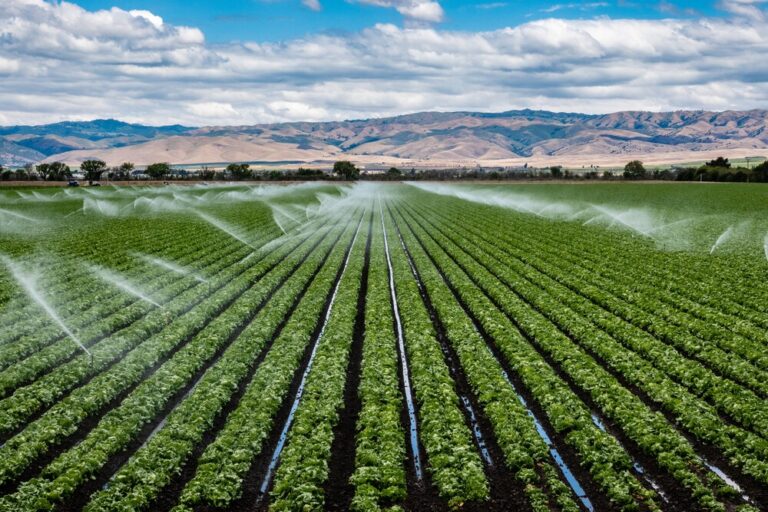
Introduction to Water and Agricultural Development
Agriculture is one of the oldest and most essential human activities, forming the foundation of food supply and economic development across the world. The success of farming depends heavily on natural resources, and among them, water is the most critical element for plant growth and soil fertility. In many regions, rainfall is not sufficient or consistent enough to support reliable crop production, which creates serious challenges for farmers. To overcome these limitations, modern farming systems rely on controlled water supply methods that ensure crops receive adequate moisture throughout their growth cycle. One of the most important innovations in this field is irrigation, which has transformed agriculture by providing a dependable source of water regardless of weather conditions. It helps farmers maintain stable production, reduce crop failure risks, and improve food availability. Without irrigation, large-scale farming would not be possible in many parts of the world where rainfall alone cannot meet agricultural needs.
Importance of Water in Plant Growth and Soil Health
Water is essential for all biological processes in plants, including germination, photosynthesis, nutrient transport, and overall development. When plants do not receive enough water, their growth slows down, leaves wilt, and productivity decreases significantly. Traditional farming methods depended entirely on rainfall, which often resulted in unpredictable yields and seasonal farming limitations. However, modern agricultural practices have introduced controlled water supply systems that ensure consistent moisture levels in the soil. Irrigation plays a vital role in this transformation by delivering water directly to crops in a regulated manner. This controlled approach ensures that plants receive the right amount of water at the right time, reducing stress and improving growth efficiency. Proper water management also supports soil health by maintaining moisture balance and promoting microbial activity, which is essential for nutrient cycling and soil fertility.
Different Methods of Irrigation Systems
Agricultural water management includes several techniques designed to suit different soil types, crops, and environmental conditions. Surface methods distribute water over the soil using gravity flow, making them simple but sometimes less efficient due to water loss through evaporation and runoff. Sprinkler systems simulate rainfall by spraying water through nozzles, providing uniform coverage and flexibility for various crops. Drip systems are considered highly efficient because they deliver water directly to the root zone in controlled quantities, minimizing waste and improving absorption. Each method serves a specific purpose depending on farming needs and resource availability. Irrigation systems are selected based on efficiency, cost, land conditions, and crop requirements to ensure maximum productivity. Modern agriculture increasingly focuses on precision techniques that reduce water usage while maintaining optimal crop health and yield.
Benefits of Controlled Water Supply in Agriculture
Efficient water management offers numerous benefits that directly impact agricultural productivity and economic stability. One of the most important advantages is the ability to maintain consistent crop growth regardless of rainfall variations. This stability allows farmers to achieve higher yields and improve the quality of harvested produce. Irrigation ensures that crops receive sufficient water throughout their growth stages, reducing the risk of drought stress and crop failure. It also enables farmers to cultivate a wider variety of crops, including those that require specific moisture conditions. Additionally, proper water supply enhances fertilizer efficiency, as nutrients dissolve and reach plant roots more effectively. This results in healthier plants and improved agricultural output, which contributes to better income and food security for farming communities.
Soil Management and Environmental Balance
Soil is a living system that requires a balanced environment of water, air, and nutrients to remain productive. Proper moisture levels help maintain soil structure, support microbial life, and improve nutrient availability for plants. However, excessive or improper water application can lead to serious problems such as waterlogging, erosion, and salt accumulation in the soil. These issues can reduce soil fertility and negatively affect long-term agricultural productivity. Careful monitoring of water usage is essential to prevent these risks and maintain environmental balance. Irrigation must be managed responsibly to ensure that water is applied in appropriate amounts without damaging soil quality. Sustainable agricultural practices focus on preserving soil health while maximizing crop production, ensuring that land remains fertile for future generations.
Technological Innovations in Water Management
Modern agriculture has experienced significant transformation due to advancements in technology, especially in water management systems. Sensors, automated controllers, and satellite-based monitoring tools now allow farmers to track soil moisture levels and weather conditions in real time. These innovations help optimize water usage by providing precise data on when and how much water should be applied. Automated systems reduce the need for manual labor and ensure consistent water delivery even in large farming operations. Irrigation has evolved from traditional manual methods into highly advanced systems that integrate artificial intelligence and data analytics for improved efficiency. This technological shift has increased productivity, reduced water waste, and improved overall farm management practices, making agriculture more sustainable and efficient.
Economic Importance of Efficient Water Usage
Agriculture is not only a source of food but also a major contributor to global economies. Efficient water management plays a crucial role in improving farm profitability and reducing production risks. Farmers who use modern irrigation systems can achieve higher yields with lower water consumption, resulting in better financial returns. Irrigation reduces dependence on unpredictable rainfall, allowing farmers to plan their activities more effectively and reduce losses caused by droughts or water shortages. It also lowers operational costs in the long term by improving efficiency and reducing resource wastage. As a result, agricultural economies become more stable, and rural communities benefit from improved income opportunities and food availability.
Sustainability and Future Agricultural Practices
Sustainability is becoming increasingly important in agriculture due to environmental challenges and growing global food demand. Efficient use of natural resources is essential to ensure long-term agricultural productivity without harming ecosystems. Farmers are now adopting water-saving techniques and environmentally friendly practices to reduce pressure on natural water sources. Irrigation plays a key role in sustainable agriculture by ensuring precise water delivery and minimizing unnecessary consumption. Drip systems, smart scheduling, and sensor-based monitoring help conserve water while maintaining crop productivity. These sustainable methods support environmental protection and ensure that agricultural systems remain viable for future generations.
Future of Farming and Water Efficiency
The future of agriculture depends on innovation, technology, and sustainable resource management. As climate change continues to affect rainfall patterns and water availability, farmers will increasingly rely on advanced systems to maintain stable production. Smart irrigation technologies, artificial intelligence, and precision farming tools will improve water distribution efficiency and crop management. Irrigation will continue to evolve as a central component of agricultural development, adapting to new technologies and environmental needs. By combining traditional knowledge with modern innovation, agriculture can achieve long-term sustainability while meeting global food demands. Efficient water management will remain essential for ensuring food security and environmental balance in the coming decades.
Conclusion
The future of agriculture depends heavily on how efficiently natural resources are managed, especially water, which is the foundation of all plant life and food production systems. As global population continues to grow and environmental conditions become more unpredictable, farmers must adopt smarter and more efficient methods to maintain stable crop yields. In this context, irrigation plays a crucial role by ensuring that water is supplied to crops in a controlled, timely, and efficient manner. It reduces dependency on rainfall, supports year-round farming, and helps improve overall agricultural productivity. Modern irrigation systems also contribute to better soil health by maintaining balanced moisture levels and reducing water wastage when properly managed. With continuous technological advancements, farming practices are becoming more precise and data-driven, allowing better decision-making and resource optimization. Irrigation will remain a key pillar of sustainable agriculture in the future, supporting food security, economic stability, and environmental protection.
