


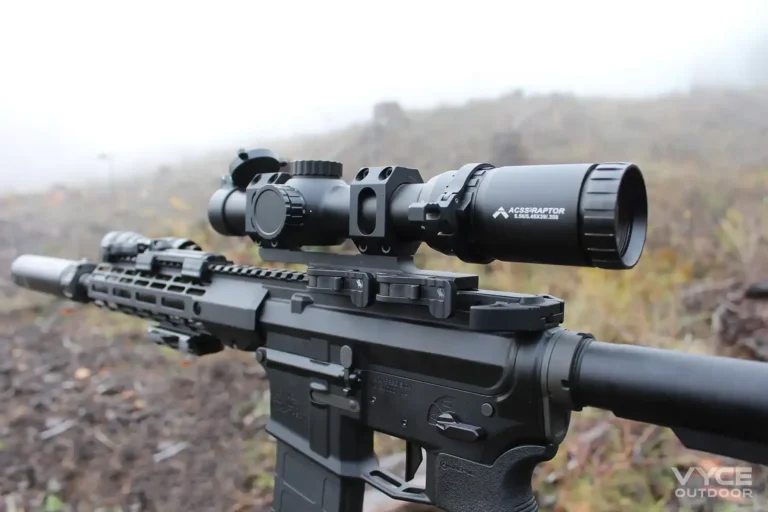
There is no shortage of opinions on what scope belongs on an AR-15. Most of them are either sponsored or written by someone who has never actually mounted one in field conditions. This breakdown skips the theater and gives you the practical differences between the three main categories, so you can make the call yourself.
The Three Categories That Actually Matter
Every AR-15 scope argument eventually comes down to three types. Red dots, fixed magnification optics, and low power variable optics. Everything else is a variation within those three buckets.
Understanding what each one does well and where each one falls short is more useful than any top ten list.
Red Dots: Built for Speed
A red dot projects a single illuminated point onto the lens. You look through the optic, put the dot on the target, and shoot. No magnification, no eye relief to fight, no reticle to sort through under stress.
The case for red dots is simple. Inside 100 yards, they are faster than any magnified optic. They work with both eyes open, which keeps your situational awareness intact. They are lighter than variable scopes. And for home defense or any scenario where close range speed is the priority, they are hard to beat.
The limitation is distance. A 4 MOA dot covers a 4 inch circle at 100 yards. That is manageable for close work. At 200 yards that same dot is covering 8 inches of target, which starts to eat into your precision. Past 100 yards, you want magnification.
Dot size matters too. Smaller dots, around 2 MOA, give you more precision but are harder to pick up fast. Larger dots, 6 MOA, are faster on target but cover more of it. Most AR-15 red dots run around 4 MOA, which splits the difference reasonably well for general use.
Battery life and zero retention are the two specs worth scrutinizing. A red dot with inconsistent zero or a battery that dies after 200 hours is a liability, not an asset.
Fixed 4x: Simple, Reliable, Underestimated
A fixed 4x magnified optic sits in a space that a lot of shooters walk right past, which is a mistake. Four times magnification handles the 100 to 300 yard range that most AR-15 owners actually shoot at, without any of the complexity that comes with a variable optic.
There are no magnification rings to adjust. No decisions to make mid-shot about where the zoom should be. You mount it, zero it, and shoot.
The etched reticle that most fixed 4x optics use is worth calling out separately. Unlike an illuminated dot that requires a battery to be visible, an etched reticle is physically marked into the glass. It is visible in any light condition with or without battery power. For a backup rifle, a hunting setup, or any situation where reliability matters more than features, that is a meaningful advantage.
Fixed 4x optics also tend to be more friendly to shooters with astigmatism. The projected dot of a red dot sight can look blurry, starburst shaped, or smeared depending on your eyes. An etched reticle does not have that problem. If you have been frustrated with red dots because the dot looks wrong to your eyes, a magnified optic with an etched reticle is worth trying.
The Rhino 4x from Ozark Armament runs $79.99 and covers this use case honestly. It holds zero across calibers, runs an etched reticle, and comes with the same lifetime warranty as their full optic lineup. If you are building a mid-range AR on a realistic budget, it is a strong pick. Head to ozarkarmament.com/ar-15-scopes to see the full spec breakdown.
LPVOs: The Flexible Option
Low power variable optics run a magnification range instead of a fixed setting. The most common configuration for AR-15 work is 1-6x, meaning the bottom of the dial gives you 1x magnification and the top gives you 6x.
At 1x, a quality LPVO runs both eyes open like a red dot. At 6x, you have enough magnification to work targets accurately out to 300 to 500 yards depending on the target size and conditions. One optic, one rifle, multiple roles.
That flexibility comes with two real tradeoffs. Weight and cost. LPVOs are heavier than red dots and fixed optics by a meaningful margin, and a reliable one costs more. If your rifle has one job, an LPVO is likely more than you need. If your rifle has multiple jobs, the tradeoff usually makes sense.
A few things to confirm before buying any LPVO. First, whether the 1x is true 1x. Some budget variable optics run slightly magnified at the bottom of the dial, which compromises the close range speed advantage. Second, whether a mount is included. Most LPVOs do not ship with rings, which adds cost and a separate decision. Third, the reticle plane. Second focal plane reticles, the most common type in this price range, keep the reticle size consistent as you zoom in. BDC hash marks on an SFP reticle are only accurate at one specific magnification, usually max power. Know which you are buying and shoot accordingly.
The Razorback 1-6×24 from Ozark Armament ships at $229.99 with a cantilever mount included, which is genuinely unusual at that price point. It runs true 1x at the bottom, real 6x at the top, and has been tested by verified buyers across patrol vehicles, range work, and field conditions. Details at ozarkarmament.com/ar-15-scopes.
FFP vs SFP: The Reticle Plane Question
First focal plane reticles scale with magnification. As you zoom in, the reticle gets larger on the glass, which means the hash marks stay accurate at every magnification level. Second focal plane reticles stay the same size regardless of zoom, which keeps the reticle sharp and easy to read at low power but means the BDC marks are only correct at one specific zoom setting.
For most AR-15 shooting inside 500 yards on variable magnification, SFP is a reasonable choice and will be what you find at most price points. If you are shooting precision work where you are dialing magnification frequently and relying on the reticle hash marks for holdover across zoom levels, FFP matters more.
Making the Call
Red dot if your shooting is under 100 yards and speed is the priority. Fixed 4x if you want simplicity, reliability, and battery independent performance in the 100 to 300 yard range. LPVO if you need one optic to cover multiple distances and use cases on the same rifle.
None of those is a wrong answer. They are just different tools for different jobs.
