


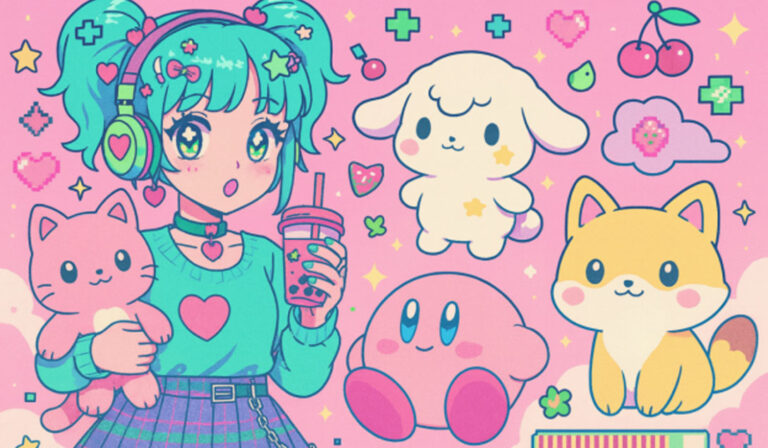
For years, kawaii fashion lived quietly in the back streets of Harajuku, a Tokyo district known for its pastel storefronts, themed cafés, and a generation of young people who refused to dress like anyone else. Today, that same energy has spilled across continents. From London to Los Angeles, kawaii style has stepped out of its original neighborhood and into the everyday wardrobes of a global audience.
What started as a niche subculture is now shaping how a whole generation thinks about clothes, identity, and self-expression. The reasons behind this shift say a lot about where fashion is heading.
From Harajuku to global wardrobes
Kawaii, which simply means “cute” in Japanese, has been a cultural force in Japan since the 1970s. But it was Harajuku, with its mix of Lolita, Decora, Fairy Kei, and Yume Kawaii looks, that turned cuteness into a fully developed visual language. Layered pastels, oversized bows, plush accessories, and playful prints became signatures of a movement that celebrated individuality over conformity.
The internet did the rest. Tumblr in the early 2010s, then Instagram, TikTok, and Pinterest, gave young audiences direct access to Japanese street style. What used to require a plane ticket to Tokyo became scrollable in seconds. Specialty stores quickly followed, making kawaii pieces available to anyone with a phone and an aesthetic vision. Kawaii Dream is one of the kawaii clothing brand spaces that has helped bring this aesthetic to English-speaking audiences, offering everything from Harajuku-style hoodies to pastel goth pieces and plushie accessories.
Why Gen Z connects with kawaii style
Kawaii fashion resonates with younger audiences for reasons that go beyond aesthetics. In a world that often feels heavy, dressing in something soft, colorful, and unapologetically playful is a quiet act of joy. It rejects the idea that maturity has to look serious.
There is also a deeper layer. Kawaii style invites self-expression in a way that mainstream fashion rarely does. It welcomes layering, mixing motifs, and combining unexpected pieces. A bunny graphic next to a pleated skirt, a pastel hoodie paired with chunky platforms, a Sailor Moon tee under a Lolita pinafore. The rules are loose by design.
For Gen Z, a generation that grew up online and watched aesthetics rise and fall in real time, kawaii offers something rare: a style with depth, history, and an actual community behind it.
The many faces of kawaii fashion
One reason kawaii has traveled so well is that it contains multitudes. It is not a single look. It is a constellation of aesthetics, each with its own mood and following.
Sweet Kawaii leans into soft pinks, plush textures, and storybook charm. Pastel Goth blends cute motifs with darker palettes, creating a balance between sweetness and edge. Cutecore brings maximalist colors, cartoon prints, and playful chaos. Yami Kawaii explores melancholy themes through a cute visual filter, while Angelcore and Coquette lean into romantic, ethereal beauty.
This variety means anyone can find a corner of kawaii that fits their personality. Whether someone wants to channel a sugary, soft girl mood or a moody, dreamy aesthetic, there is a kawaii subgenre waiting for them.
Pastel aesthetics and the soft girl moment
Among all the kawaii variations, pastel aesthetics have become particularly influential in mainstream fashion. Soft pinks, lavenders, butter yellows, and mint greens have moved from kawaii-specific stores into general retail. The soft girl trend, born on TikTok, borrowed heavily from this color palette and its general mood of tenderness and ease.
The result is a softening of how Gen Z dresses overall. Even people who would not call themselves kawaii fans now own pieces that draw directly from the aesthetic. A pastel cardigan, a plushie keychain on a bag, a heart-shaped hair clip. These small touches have become part of a much wider visual vocabulary.
Kawaii as a long-term shift, not a passing trend
Fashion cycles move fast, and aesthetics often burn bright before fading. Kawaii is different. It has been around for fifty years in Japan and has steadily expanded its global footprint over the last decade. The community behind it keeps creating, sharing, and reinventing the style, which gives it a kind of resilience that pure trends rarely have.
The rise of dedicated retailers, the growth of online communities, and the constant flow of new content from Tokyo and beyond all point to one thing. Kawaii is not a moment. It is a movement, and one that keeps finding new ways to grow.
For anyone curious about exploring the aesthetic, the entry point is simple. Start small, follow the styles that speak to you, and let the rest unfold naturally. Kawaii fashion was never about getting it right. It was always about getting it real.
