


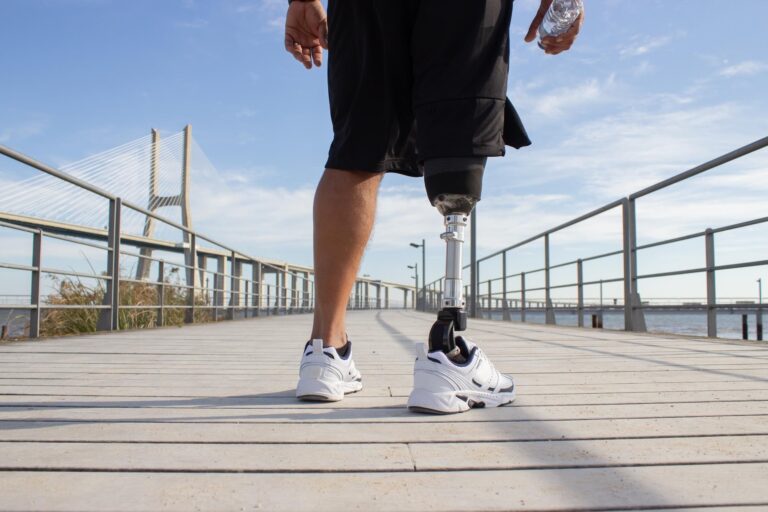
A transtibial amputation—a procedure performed below the knee is often considered one of the more successful levels of limb loss in terms of functional restoration. Because the natural knee joint is preserved, patients maintain a significant mechanical advantage, allowing for a more intuitive gait and lower energy expenditure compared to above-knee amputations.
When seeking a prosthetic leg in Fort Myers, patients are entering a healthcare landscape that combines specialized clinical expertise with advanced rehabilitative technology. Understanding the realistic outcomes and the timeline of recovery can empower you to set meaningful goals. Here is a comprehensive look at the results you can anticipate with a transtibial prosthetic leg.
High Potential for Independent Mobility
The most significant result for the majority of transtibial patients is the return to independent walking. Statistics indicate that roughly 75% to 80% of below-knee amputees achieve successful ambulation, with many returning to their pre-surgical level of activity within the first year.
The Advantage of the Natural Knee
Because the biological knee remains intact, the brain still has direct control over the most important joint for stability. Patients typically find that they can stand, pivot, and walk on uneven surfaces with much more confidence than those who must rely on a mechanical or microprocessor knee. This preservation of the knee also means that the “cost” of walking—the extra energy your body uses to move—is significantly lower, reducing fatigue during daily activities.
Custom Comfort and Socket Integration
A primary goal of expert care is the creation of a “silent” interface—a socket that fits so well you eventually stop noticing it is there. In a specialized clinic, you can expect a transition from a temporary “diagnostic” socket to a final, definitive version.
Digital Precision
Many clinics in Southwest Florida utilize 3D digital scanning to map the residual limb. This results in a socket that distributes weight evenly across the “pressure-tolerant” areas of the shin and calf while protecting sensitive bony areas like the fibular head. You can anticipate a fit that minimizes “pistoning” (the leg sliding in and out of the socket) and prevents skin breakdown, which is essential for long-term success.
Advanced Foot and Ankle Technology
While the socket provides the connection, the prosthetic foot provides the function. Depending on your lifestyle, you can anticipate being fitted with technology that mimics the complex mechanics of a human ankle.
- Energy-Return Feet: Made from high-grade carbon fiber, these feet act like a spring. They absorb energy during the “heel strike” and release it during “toe-off,” helping you walk longer distances without getting tired.
- Multi-Axial Ankle Units: These allow the foot to move in multiple directions, which is vital for patients in Fort Myers who enjoy walking on the beach, through parks, or on uneven terrain.
- Microprocessor Feet: Some high-activity patients may be candidates for feet with integrated sensors. These detect inclines or stairs and automatically adjust the ankle angle to prevent trips and falls.
The Timeline of Functional Recovery
The results of a transtibial prosthetic leg do not happen overnight; they are the product of a structured, phased recovery plan.
Phase 1: Post-Surgical Healing (Weeks 1–6)
During this phase, the focus is on wound healing and “edema management.” You will likely use a shrinker sock to shape the limb. The primary goal here is to prepare the tissue for the first prosthetic fitting.
Phase 2: The Temporary Prosthesis (Months 2–6)
Once the limb has healed, you will receive a preparatory leg. This is a time of rapid change; your residual limb will likely shrink as the muscles stabilize. You can anticipate frequent visits to your prosthetist for adjustments and “sock ply” management to maintain a tight fit.
Phase 3: The Definitive Prosthesis (6 Months+)
Once the limb volume has stabilized, a final leg is fabricated using lightweight, durable materials like titanium and carbon fiber. This is when patients often see their most significant gains in walking speed and overall endurance.
Psychological and Social Reintegration
Beyond the physical mechanics, patients can anticipate a significant boost in psychological well-being. Regaining the ability to stand at eye level with peers and perform daily tasks independently is a major milestone in the recovery process.
Community and Peer Support
Expert care in Fort Myers often includes access to peer visitor programs. Speaking with another transtibial amputee who has successfully navigated the process provides a unique form of “social evidence” that recovery is possible. This support helps manage the emotional transition, reducing the anxiety often associated with limb loss.
Long-Term Health Benefits
Using a well-fitted prosthesis also serves as a form of preventative medicine. By returning to an active lifestyle, patients can better manage secondary health concerns.
- Cardiovascular Health: Walking is one of the best ways to maintain heart health and manage weight, which is especially important for patients whose limb loss was related to vascular issues.
- Joint Protection: A properly aligned prosthesis ensures that the “sound” (unaffected) leg is not overloaded. This reduces the risk of developing premature osteoarthritis in the healthy hip and knee.
- Bone Density: The weight-bearing nature of walking with a prosthesis helps maintain bone density in the residual limb and hip.
Navigating Challenges: What to Watch For
While the anticipated results are positive, expert care also involves managing common obstacles. You should expect your clinical team to teach you how to handle:
- Phantom Limb Sensations: Most patients experience some level of feeling in the missing limb. Through techniques like mirror therapy and consistent prosthetic use, these sensations usually become manageable or fade over time.
- Volume Changes: As mentioned, the limb will change size. Learning how to add or remove prosthetic socks is a skill every transtibial patient must master to ensure the results remain consistent.
Final Expectations for Your Journey
When you commit to professional care for a prosthetic leg in Fort Myers, you are choosing a path toward a “new normal” that is often much more active than patients initially imagine. You can anticipate a future where you can return to work, enjoy the Florida outdoors, and engage with your family without being limited by your mobility.
By combining the mechanical advantages of a transtibial amputation with the latest in carbon fiber technology and a dedicated rehabilitation team, the result is more than just an artificial limb—it is a regained sense of freedom and the ability to live life on your own terms.
