


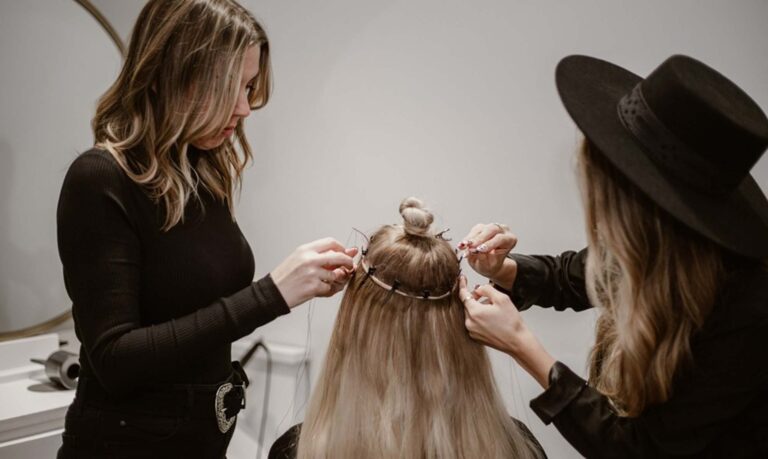
Quality hair extensions should look natural, feel secure, and be fitted so they protect your own hair. The best place to get them is a Sydney salon that offers a detailed consultation, multiple extension methods, premium human hair, and clear maintenance advice before any application begins.
Good extension work is not a standard add-on service. It requires technical placement, colour matching, weight control, and an understanding of how natural hair responds to tension. For people comparing the most popular hair extensions in Sydney, the right choice usually comes down to the salon’s range of methods, stylist training, and aftercare process.
Quality Starts With a Personal Consultation
A professional extension appointment should begin with a consultation, not a product recommendation. The stylist needs to assess hair density, scalp sensitivity, colour history, and the condition of the natural hair before recommending a method.
This step matters because extensions add weight to natural hair. If the chosen method is too heavy, placed too close to the scalp, or attached to fragile strands, it can create tension and breakage over time. Skilled stylists manage this by selecting the right attachment size, spacing, and placement pattern.
A detailed consultation should also explain maintenance requirements, expected longevity, and realistic outcomes. Honest guidance is usually a strong indicator of an experienced extension salon.
The Best Salons Offer More Than One Method
Hair extensions Sydney services vary widely because every client’s hair is different. A salon that offers several methods can tailor the service rather than forcing one technique on every hair type.
Tape extensions are often chosen for a flatter, softer finish because the panels sit close to the head. They can work well for clients wanting natural-looking length or volume with manageable maintenance.
Weft extensions suit clients who want more noticeable fullness. Depending on the application system, they can be fitted with beads, rings, or sew-in techniques. The goal is to distribute weight evenly so the extensions feel secure without unnecessary pulling.
Keratin bond and single-strand methods allow more detailed placement. These can be useful for layered haircuts, finer sections, or areas that need controlled blending. Mesh integration is a more specialised option for thinning or patchy hair because it uses a fine breathable mesh to support extensions where natural density is limited.
Hair Quality Affects the Final Result
The quality of the hair itself directly affects how extensions move, style, and age. Premium human hair generally blends better than synthetic alternatives because it responds more naturally to washing, drying, heat styling, and professional colour matching.
Extensions should have consistent thickness throughout their lengths and ends. When the ends are thin or uneven, the result can look artificial even when the colour match is accurate. The use of premium, double-drawn European cuticle hair for a fuller, more natural finish.
Colour matching is another technical step. Extensions should not only match the base shade; they should also work with highlights, lowlights, gloss, tone, and the way colour changes under natural light. A proper match often involves blending several shades rather than relying on one flat colour.
This is why quality hair extensions Sydney work usually depends on both product selection and stylist judgment. The hair must be good, but the fitting must also suit the client’s natural texture, haircut, and styling habits.
Safe Application Protects Natural Hair
Hair extension damage is usually linked to poor application, inappropriate methods, or inadequate maintenance. Correctly fitted extensions should feel comfortable, sit evenly, and allow the scalp and natural hair to move without strain.
Placement is central to safe application. Attachments should not be positioned where they pull during normal movement, brushing, or sleeping. The stylist also needs to avoid overloading fine or fragile sections, especially around the hairline and crown.
Professional salons usually explain how the chosen method works before fitting begins, including the timing of maintenance and safe removal procedures to help protect natural hair.
Maintenance Determines How Long Extensions Last
Extensions are a service, not a single appointment. Their lifespan depends on how they are washed, brushed, dried, styled, and maintained between salon visits.
Clients are usually advised to use gentle, extension-safe products and avoid applying oily or heavy conditioners near attachment points. Brushing should start from the ends and move upward carefully to reduce tension at the roots.
Sleeping with hair loosely secured, properly drying the roots, and using heat protection can help reduce tangling and matting. Regular maintenance appointments allow stylists to reposition extensions and monitor the condition of the natural hair.
Where to Look for Quality Extension Services in Sydney
The strongest hair extensions Sydney providers usually have experienced stylists, consultation-led recommendations, and a broad range of extension systems suited to different hair types.
Look for salons that offer methods such as tape extensions, weft systems, keratin bonds, microbead or nanobead applications, V-Light extensions, mesh integration systems, clip-ins, toppers, and customised hair pieces.
A good salon should also be transparent about cost, appointment time, maintenance frequency, product care, and expected wear. That information helps clients accurately compare value rather than choosing based solely on the lowest starting price.
Quality Extensions Come From Skill, Hair Quality, and Aftercare
The best place to get quality extensions is a specialist salon that treats the service as a customised hair solution. The right result comes from matching the method, hair type, colour, placement, and maintenance plan to the individual client.
For anyone comparing hair extensions Sydney options, a strong consultation is the clearest starting point. Ask how the method works, how the extensions will be maintained, what hair quality is being used, and how the stylist will protect the natural hair.
