


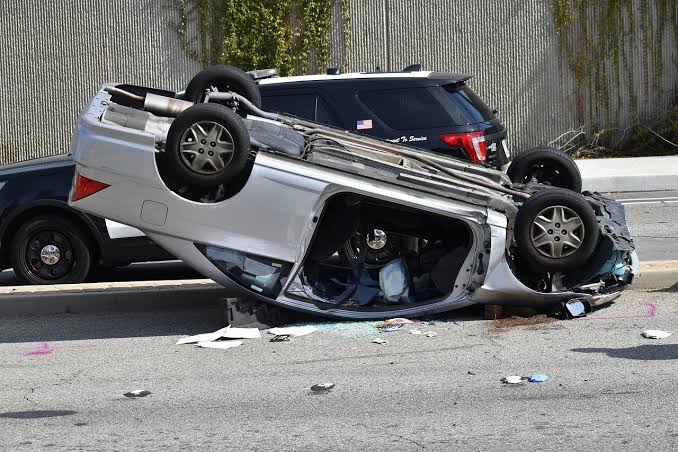
Mesa is one of the fastest-growing cities in the country, and its roads show that every single day. Commuters, delivery vehicles, and rideshare drivers share corridors that were never designed to handle today’s volume. The result is a collision problem that local data makes hard to ignore.
Traffic Growth in Mesa and Its Impact
Mesa’s road network has expanded, but not fast enough to keep pace with population demand. The city sits at the crossroads of several major regional arteries, pulling traffic from Gilbert, Chandler, and the broader East Valley into its core every morning and evening. That pressure creates predictable chokepoints, especially where surface streets intersect with freeway on-ramps.
In 2024, Mesa recorded 8,022 total crashes, 2,503 injuries, and 46 fatalities, making it the second most crash-affected city in Arizona behind only Phoenix. Those numbers reflect a city absorbing enormous traffic loads across a relatively compact urban grid. More vehicles mean more opportunities for human error, and Mesa’s mix of high-speed corridors and dense residential streets creates exactly the conditions where errors turn into serious collisions.
Most Common Causes of Local Car Accidents
The causes behind Mesa’s crash numbers line up with statewide patterns, and none of them are surprising. What stands out is how frequently these behaviors appear together in a single incident.
The leading contributors include:
- Distracted driving: Rear-end collisions accounted for nearly 38,600 crashes statewide in 2024, a clear signal that drivers are frequently not paying attention, whether from texting, checking GPS, or other in-vehicle distractions.
- Speeding: Speeding was a factor in 417 deaths and over 20,000 injuries across Arizona, accounting for one-third of all traffic fatalities in 2024.
- Impaired driving: In 2024, 5,520 crashes were alcohol-related, resulting in 3,576 injuries and 347 deaths, with alcohol-related crashes accounting for nearly 28% of all fatal crashes statewide.
- Failure to yield: Particularly dangerous at high-volume intersections, where drivers misjudge gaps in traffic.
- Aggressive merging: A common complaint on Mesa’s freeway on-ramps, especially during peak hours.
Accident Hotspots Near US-60 and Loop 202
The US-60 (Superstition Freeway) and Loop 202 (Santan/Red Mountain) corridors consistently show up in local crash reports. Both routes carry enormous daily volumes of commuter and commercial traffic, and both have documented histories of serious collisions.
Crash records show multi-vehicle wrecks at US-60 and Higley Road resulting in hospitalizations, with incidents involving five or more vehicles and multiple occupants. The Loop 202 near McKellips Road and near Baseline Road has seen similar patterns, with angle and multi-vehicle crashes reported at both locations. The common thread across these hotspots is speed differential: drivers entering or exiting at slower speeds colliding with through-traffic moving at freeway pace.
Surface streets feeding these freeways carry their own risks. Intersections along Main Street, Dobson Road, and Gilbert Road see high pedestrian and bicycle activity alongside heavy vehicle traffic. That combination demands consistent attention from every driver at every signal.
Common Injuries After a Collision
The injuries that follow a Mesa car accident range from minor to permanently life-altering. Rear-end crashes, the most common collision type, frequently produce whiplash, herniated discs, and traumatic brain injuries, even at moderate speeds. Higher-speed freeway crashes introduce broken bones, internal organ damage, and spinal cord injuries.
Soft tissue injuries deserve particular attention. They are often dismissed early because symptoms take days or weeks to fully develop. A person who walks away from a crash feeling sore may be dealing with a serious cervical injury by the following week. Documenting symptoms immediately, and continuing to do so, matters for both medical care and any future legal claim.
Understanding Arizona Fault Laws
Arizona follows a pure comparative fault system. This means that even if an injured driver is found partially responsible for a crash, they can still recover damages, though the amount is reduced by their percentage of fault. A driver deemed 30% at fault in a $100,000 claim, for example, would recover $70,000.
This framework matters because insurance companies use it strategically. Adjusters frequently try to assign a higher percentage of fault to the injured party in order to reduce the payout. Understanding how comparative fault works and how it applies to the specific facts of a crash is essential before accepting any settlement offer.
Arizona also requires drivers to carry minimum liability coverage, but minimum coverage rarely reflects the true cost of a serious injury. Medical bills, lost wages, and long-term care expenses can exceed policy limits quickly. Identifying all available coverage sources is a necessary early step after any collision.
Steps to Protect Your Claim
What happens in the hours and days after a crash directly affects the strength of any future claim. A few concrete actions make a measurable difference.
- Call 911 and wait for a police report. The official report establishes a documented record of the crash.
- Photograph everything at the scene. Vehicle positions, road conditions, skid marks, traffic signals, and visible injuries all matter.
- Get medical attention the same day. Gaps in treatment create gaps in documentation that insurers exploit.
- Avoid giving recorded statements to opposing insurance adjusters. These statements are used to minimize claims, not to help injured parties.
- Preserve evidence. Keep damaged clothing, save all medical bills, and do not repair the vehicle before it has been inspected.
When Legal Representation Helps
From 2014 to 2024, the number of traffic fatalities in Arizona increased 62%, and the state’s fatality rate climbed 29%, placing Arizona among the highest in the nation. That trajectory means more families are dealing with serious crash injuries, more insurance disputes, and more tangled liability questions than ever before.
Navigating a personal injury claim while recovering from an injury is genuinely difficult. Insurance companies have teams of adjusters and attorneys whose job is to cut payouts. An experienced car accident attorney in Mesa can review the crash evidence, identify liable parties, calculate the full value of a claim, and handle negotiations so the injured party can focus on getting better.
Mesa continues to pursue reduced serious injuries and fatalities through citywide safety initiatives, including data-driven signal changes and a safety action plan targeting a 30% reduction in fatal and serious crashes by 2030. Those efforts are meaningful. But until the numbers reflect real change, drivers hurt on these roads deserve to understand both their medical options and their legal rights.
The Takeaway
Mesa’s crash numbers are not bad luck. They reflect the predictable consequences of high traffic volume, driver behavior, and infrastructure that has not kept pace with growth. Knowing the causes, the hotspots, and the legal framework governing fault in Arizona gives drivers a clearer picture of what they face on these roads and what to do if a crash changes everything.
