


It’s a familiar story: an entrepreneur, fueled by passion and a great idea, launches a business. For the first year, adrenaline and long hours are enough to keep things afloat. But soon, the 16-hour days become unsustainable. Sales plateau, and the owner is trapped, working harder than ever for diminishing returns.
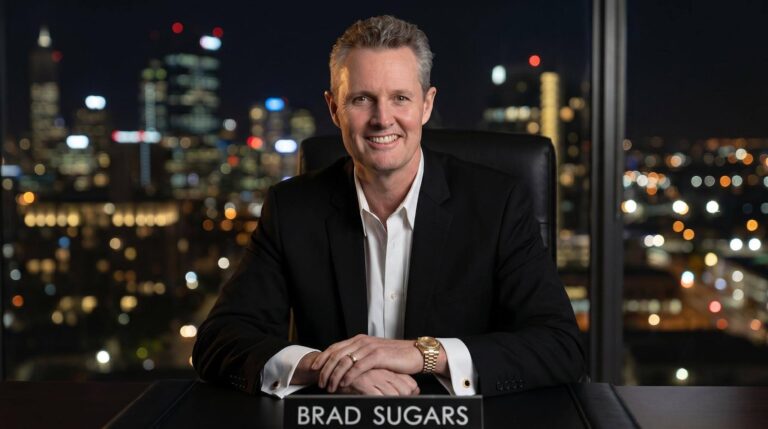
This isn’t some rare exception; it’s a pattern that plays out in countless startups. It’s also the exact problem that entrepreneur and author Brad Sugars has dedicated his career to solving. Drawing on over 30 years of experience building the ActionCOACH franchise into a global network across 80 countries, he has identified a core set of overlooked but critical mistakes that consistently derail promising businesses.
Mistake 1: Confusing Being the Best Technician with Being the Best Owner
The most common trap for entrepreneurs is working in their business, not on it. A great baker opens a bakery, or a talented graphic designer starts an agency. They are experts at their craft, but the craft itself isn’t the business. The business is the system that delivers the product or service.
Brad Sugars argues that when owners remain the central cog, the one who bakes every loaf or designs every logo, they haven’t built a business. They’ve just bought themselves a high-stress job with unlimited hours. Scaling becomes impossible because the company’s capacity is capped by the owner’s personal output.
The solution is business systemization. The famed ActionCOACH methodology, particularly the “6 Steps to a Better Business” lays out a framework for creating documented systems for everything from marketing and sales to operations and team management. The objective is to build a commercial, profitable enterprise that can run without its owner, freeing them up to focus on strategic growth and leadership.
Mistake 2: Relying on Bank Balance “Accounting”
Many new entrepreneurs see money in the bank and think they’re succeeding, but that’s a dangerously simplistic view. One of the most common startup failures is ignoring the key financial drivers of the business.
Real financial control isn’t just about managing cash flow; it’s about deeply understanding profit margins, customer acquisition costs, lifetime customer value, and break-even points. Without these numbers, every decision is a guess. You simply can’t improve what you don’t measure.
This is why Brad Sugars’ emphasis on a “test and measure” culture is so critical. Lasting business growth strategies aren’t born from gut feelings, they’re built on data.
By tracking key performance indicators (KPIs), owners can see which marketing campaigns are actually generating profit, which products are the most lucrative, and where operational leaks are draining cash. This data-driven approach turns guesswork into a predictable science for growing profits.
Mistake 3: The “I’ll Do It Myself” Syndrome
The belief that no one can do a job as well as the founder is a huge roadblock to growth. This “lone wolf” mentality inevitably leads to burnout and puts a hard ceiling on what the business can achieve. Managing a team effectively isn’t just about hiring people. It is about building a culture of ownership and empowering them to run the systems the owner has created. A business that depends entirely on one person isn’t a scalable asset, it’s a fragile operation.
The Brad Sugars coaching philosophy treats the team as the company’s most important asset. The focus shifts to creating clear roles, providing solid training, and establishing systems that let employees succeed without constant oversight. This leverage through people is what allows a business owner to finally transition from being a manager to a true leader and visionary.
Mistake 4: Chasing Shiny Objects Instead of Building a System
New marketing fads pop up every week, from another social media platform to the latest AI tool. Desperate for leads, entrepreneurs often jump from one tactic to another without a coherent plan. This scattergun approach is both exhausting and ineffective.
Sugars often advises small business owners to stop chasing tactics and start building a reliable machine for attracting and converting customers. That means creating a systematic, documented sales and marketing funnel that is both predictable and measurable.
Mistake 5: Believing Passion and Hard Work Are Enough
Passion is the spark that starts a business, but it’s a poor substitute for a strategic plan. Hard work is non-negotiable, but working hard on the wrong things just leads to failing faster.
The ultimate goal should be to build a business that not only generates income but also creates wealth and freedom for its owner. This requires a mental shift from just running the business day-to-day to building a valuable asset that could one day be sold or run by a general manager.
How Brad Sugars’ Approach Compares to Other Business Advice
Entrepreneurs looking for guidance face a sea of options, from free online content to expensive seminars. The Brad Sugars coaching model stands apart by focusing on a systematic, real-world framework delivered through a global network. Here’s how it differs:
- A Proven Methodology: Where many “gurus” offer motivation and high-level theory, the ActionCOACH approach is built on a documented, proprietary system. The “6 Steps to a Better Business” provides a step-by-step roadmap for getting things done.
- A Real Support Structure: A lot of coaching is delivered through pre-recorded courses or massive events. Brad Sugars built a franchise of over 1,000 certified coaches in 80+ countries, which means personalized coaching with local market knowledge and direct accountability.
- A Relentless Focus on Results: The goal of a motivational speaker is inspiration. The goal of an ActionCOACH is tangible business growth, backed by a culture of testing and measuring everything to prove ROI.
- A Clear Endgame: While a common theme is simply to “hustle,” the Brad Sugars philosophy is explicitly about building a business that can run without the owner. This creates true freedom and a valuable, sellable asset.
The Gap Between Knowing and Actually Building
Most business owners are not short on information. They have read the books, watched the videos, and attended the seminars. The real gap is not knowledge. It is execution. Knowing that a business needs systems, clear financials, and a strong team is very different from actually building those things while managing daily operations, putting out fires, and trying to grow revenue at the same time. That gap is where most businesses stall, and it is precisely where structured coaching makes the most practical difference.
Brad Sugars built ActionCOACH around this reality, not to hand owners another set of ideas, but to give them a framework, a coach, and the accountability to actually implement.
If you are ready to close the gap between where your business is and where it could be, visit bradsugars.com to explore coaching options and take the next step.
